




Japanese Grammar – て- Form of Verbs – Review Notes
Today we learned about the て- form (te-form) of Japanese verbs! This form has many uses and is a very important grammar point.
In these video review notes we will go over today’s Japanese grammar in greater detail and learn some additional information.
………………………………………………………………………………..
Today’s Grammar Lesson:
★ Today we will learn about the て-form (te-form) of Japanese verbs.
★ て-form (te-form) by itself does not have a tense (past, present, etc.)
★ There are many, many ways to use て-form (te-form).
………………………………………………………………………………..
How to make て-form:
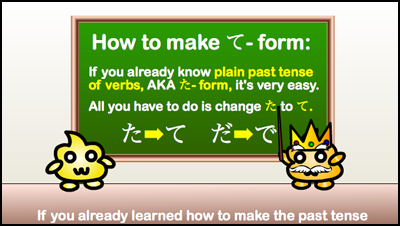
★ If you already learned how to make the past tense of the plain form of verbs, AKA た-form (ta-form), it is very easy to make the て-form (te-form).
★ To make て-form from た-form, just change た (ta) to て (te) or だ (da) to で (de)
………………………………………………………………………………..
Examples – Changing た-form to て-form
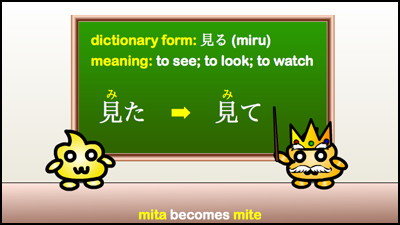
★ The past tense of the verb 見る (miru) – “to see”, “to look”, or “to watch” – is 見た (mita)
★ The て-formis 見て (mite)
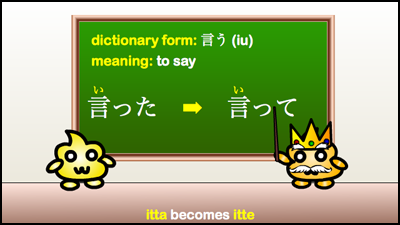
★ The past tense of the verb 言う (iu) – “to say” – is 言った (itta)
★ The て-formis 言って (itte)
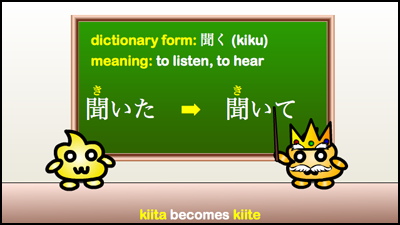
★ The past tense of the verb 聞く (kiku) – “to listen” or “to hear” – is 聞いた (kiita)
★ The て-formis 聞いて (kiite)
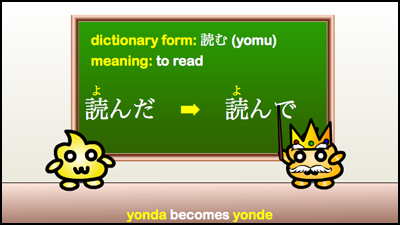
★ The past tense of the verb 読む (yomu) – “to read” – is 読んだ (yonda)
★ The て-formis 読んで (yonde)
………………………………………………………………………………..
Watch Previous Video to learn た-form:
★ If you don’t know how to make た-form, learn about ithere!
★ If you don’t know anything about Japanese verbs, clickhere!
………………………………………………………………………………..
How to Use て-form (te-form):
★ You can do many, many things with て-form (te-form).
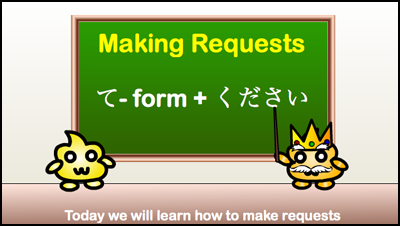
★ Today, we will learn how to make requests in Japanese using て-form + ください (kudasai).
………………………………………………………………………………..
Making Commands: Using て-form alone
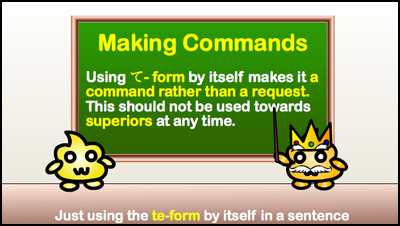
★ If you use て-form alone (without kudasai), it is a command, not a request.
★ This is – at best – very casual, and – at worst – quite rude (depending on your tone of voice and who you are speaking to.)
★ The appropriateness of using て-form alone depends on the situation.
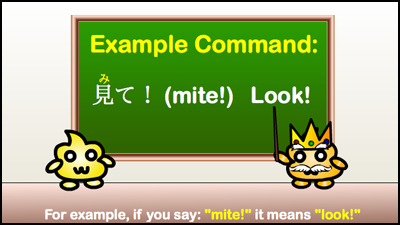
★ As an example, if you just say 見て! (mite!) it means “look!”
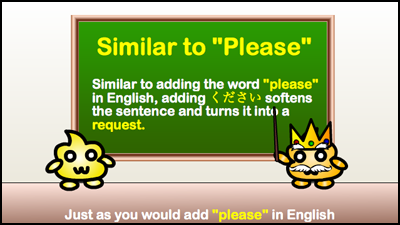
★ Similar to adding the word “please” in English, adding ください (kudasai) softens the command, turning it into a request.
………………………………………………………………………………..
Examples using ください (kudasai):
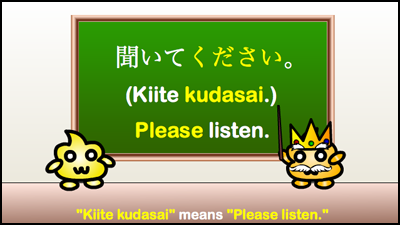
★ 聞いてください (kiite kudasai) means “Please listen.”

★ 見てください (mite kudasai) means “Please look.”
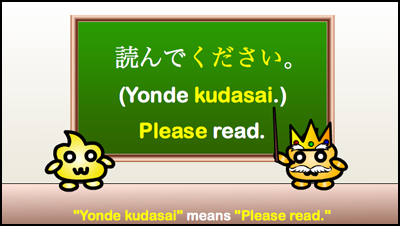
★ 読んでください (yonde kudasai) means “Please read.”
………………………………………………………………………………..
More Information about て-form +ください
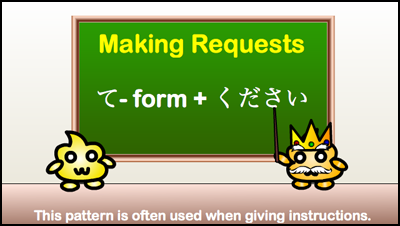
★ て-form +ください is often used when giving instructions.
★ Although using て-form +ください is more formal than using て-form alone, it is not appropriate for all situations.
★ You should avoid using ください when speaking to social superiors.
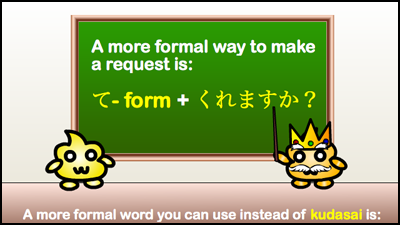
★ A more formal word you can use instead of ください (kudasai) is くれますか? (kuremasu ka?)
★ If you use くれますか? (kuremasu ka?) it becomes a polite request which closely corresponds to “Would you please…?”
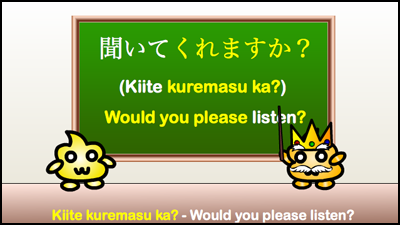
★ 聞いてくれますか? (Kiite kuremasu ka?) means “Would you please listen?”
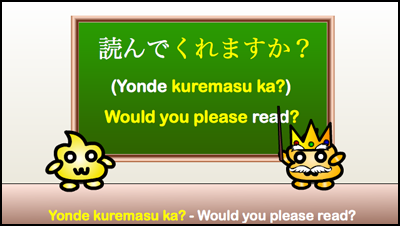
★ 読んでくれますか? (Yonde kuremasu ka?) means “Would you please read?”
………………………………………………………………………………..
Levels of Formality and Requests:
★ The Japanese language has a very complex structure of formality. There are often many ways to say the same thing in different situations.
★ The following table lists various ways of making requests with the most polite at the top using the verb 書く (kaku – to write) as an example.

……………………………………………………………………………….
Want to learn over 600 Japanese verbs and have a quick and easy reference to all of their conjugations?? We recommend the Complete Japanese Verb Guide from Tuttle! ⬇

In addition to being a quick but thorough reference to over 600 verbs and their conjugations, it also includes hundreds of useful example sentences! Get it now!
……………………………………………………………………………….
Do you want a Japanese tutor?
Take a Free Trial Japanese Lesson with Professional Japanese Teachers on kakehashijapan.com!

………………………………………………………………………………..

………………………………………………………………………………..

Add a comment
☆Start learning here☆
☆ Japanese Books ☆




0 comments